

Should I get a second dog? Sometimes the answer is a confident “yes”—and sometimes the smartest move is “not yet.” This guide helps you make that call using a simple, real-world compatibility screen (temperament, energy level, and play style) before you commit.
Then, if you decide to move forward, you’ll learn how to introduce dogs to each other in a way that lowers stress, reduces scuffles, and sets up both dogs for a calmer first month together. Think of it as a practical playbook you can actually follow—not a feel-good checklist you forget the next day.
The Second Dog Compatibility Checklist: The Gate You Must Pass
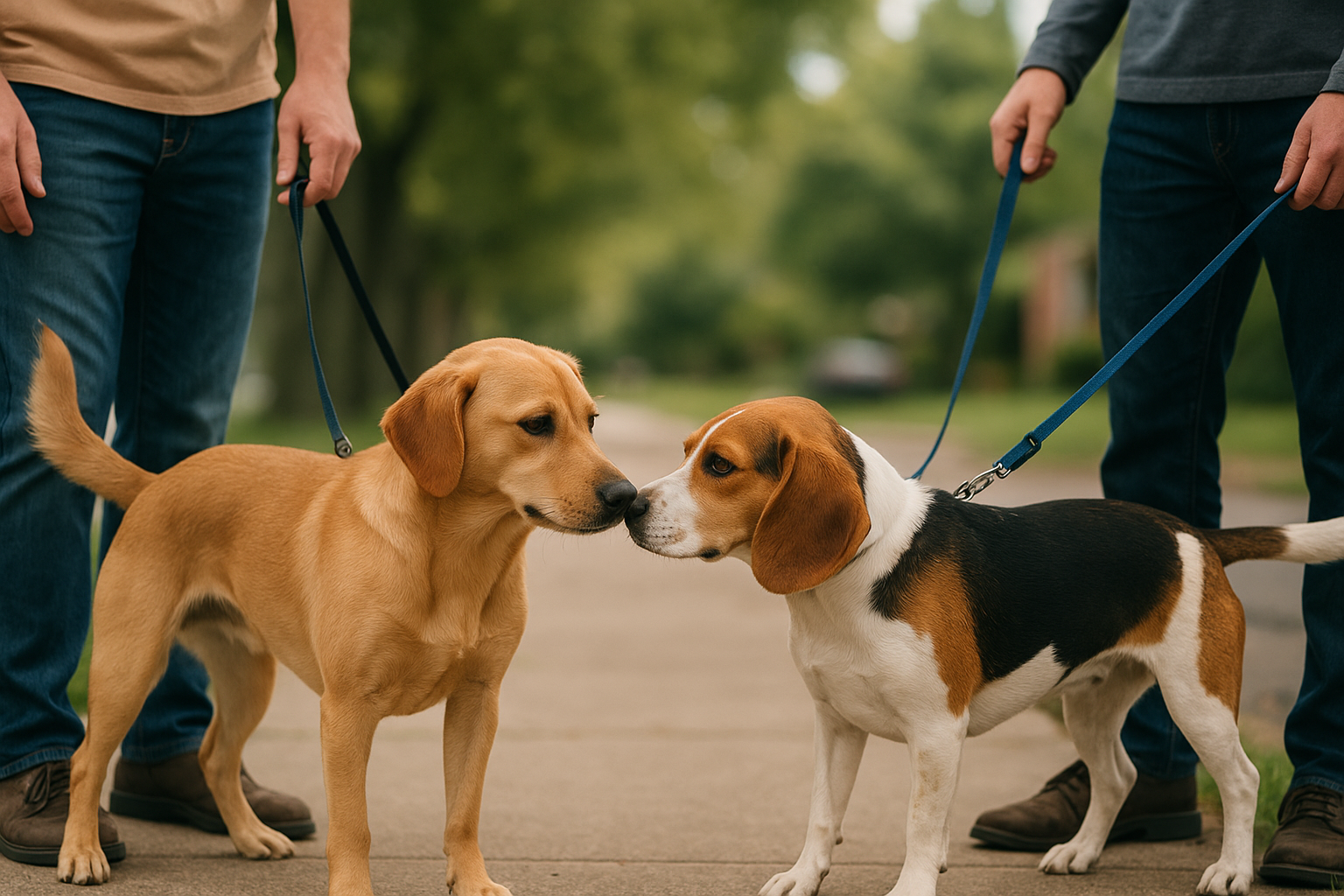
Use this short gate to reach a go/no-go decision. Each item is an observable action or condition.
-
Energy and activity match: On a typical day, can you meet both dogs’ exercise needs without over- or under-working either? A chronic mismatch (e.g., high-drive adolescent + low-energy senior) often creates frustration or pestering. Guidance from the American Kennel Club emphasizes readiness and routine protection for resident dogs when adding a second dog, including attention to energy levels and resource setup, as outlined in the AKC’s readiness and adjustment guidance.
-
Play-style complement: During a 10-minute parallel walk and 2–3 brief greetings, do you see reciprocal, relaxed play signals (loose bodies, play bows, short breaks)? If stiffness or hard stares appear, pause and reset (more on red flags below). See AKC’s overview of reading canine signals in understanding dog body language.
-
Known triggers and thresholds: If either dog has a history of leash reactivity, resource guarding, or fear of other dogs, can you manage setups so neither is pushed past threshold (the point where calm thinking flips to stress)? If not, this is a no-go until you have a management plan and professional input.
-
Age and sex pairing: Opposite-sex pairings tend to be simpler for many homes. If choosing same-sex, plan for stronger management and training consistency. AKC notes timing and pairing considerations when adding a second dog in their guidance on when to get a second dog.
-
Health and vaccination status: Both dogs should be up to date on core vaccines and parasite control; you need the ability to separate and quarantine if either shows signs of illness after adoption or transport.
-
Resource safety at home: You can duplicate bowls, beds, and resting spaces, and you’re willing to remove high-value chews at first. Early separation of food and prized items reduces conflict, a point also stressed by the Humane Society in their resource guarding overview.
-
Human time budget: You can supervise early interactions, run separate short training sessions, and maintain walks for both. If you’re relying on “they’ll entertain each other,” reconsider.
Go/No-Go: If two or more items above are shaky—or a major red flag appears—choose “not yet” and consult a trainer before proceeding. If all boxes check out with relaxed body language, proceed to safe introductions.
What I Wish I Knew Before Getting a Second Dog
Most “second dog” advice sounds simple until you’re living it: two dogs, two sets of needs, and one human schedule. Here are the lessons that tend to show up after you’ve already made the decision—so you can plan for them upfront.
-
Energy mismatch doesn’t just look like “one dog is annoying.” It often turns into a daily pattern: the higher-energy dog pesters, the lower-energy dog escalates, and you end up managing tension instead of enjoying the “two-dog dream.” If you want a quick reality check, watch how your resident dog behaves after a normal day’s exercise. If they’re still jazzed up, adding a second dog usually amplifies that energy—not dilutes it.
-
A great first meeting doesn’t mean you’re in the clear. Plenty of pairs look fine on day one and get snippy on day five—right when the new dog starts to feel at home and test boundaries. That’s why your first-week management (gates, separate feeding, supervised play) matters more than one “cute” sniff.
-
Food and doorways cause more drama than toys. People worry about tug ropes; the real issues are often narrow spaces and predictable routines: the kitchen at dinner time, the entryway when the leash comes out, the couch at night. Your plan should include traffic control (baby gates, crates, or a simple “wait” cue), not just “more toys.”
-
Your time is the actual bottleneck. Two dogs doesn’t automatically mean less work. It usually means more: separate training reps, separate decompression time, and more structured walks. If you’re already skipping walks because life is busy, a second dog won’t fix that—it’ll expose it.
-
Progress is rarely a straight line. One setback (a growl over a bowl, a stiff moment at the gate) doesn’t mean you chose the wrong dog. It means you need to back up a step, add distance, and add more structure.
If you’re nodding along, good. You’re thinking like a planner—and that’s exactly what a successful two-dog household requires.
Deeper Screens Before You Decide
Training baseline and manners: A resident dog with solid recall, settle, and leave-it makes onboarding smoother. If your first dog still struggles with basics, it’s usually wiser to stabilize skills before adding another learner.
Household constraints: Consider landlord/insurance rules and breed/size caps. Also map out doorways, baby-gate placements, and whether you can create two fully separate feeding/rest zones for at least a few weeks.
Travel for two: Each dog needs its own restraint (harness, crate, or carrier) anchored in the back seat or cargo area; loose travel increases risk for both dogs and humans. The Center for Pet Safety explains core transport rules and certified options in their travel tips and certification resources.
Same-sex or intact dogs: Same-sex pairings can work but may demand more structure. If either dog is intact, discuss timing and risks with your veterinarian and trainer.
Feeding logistics: Plan separate meal locations and scheduled feeding. Free-feeding in multi-dog homes often fuels guarding or stealing.
How to Introduce Dogs to Each Other on Neutral Ground
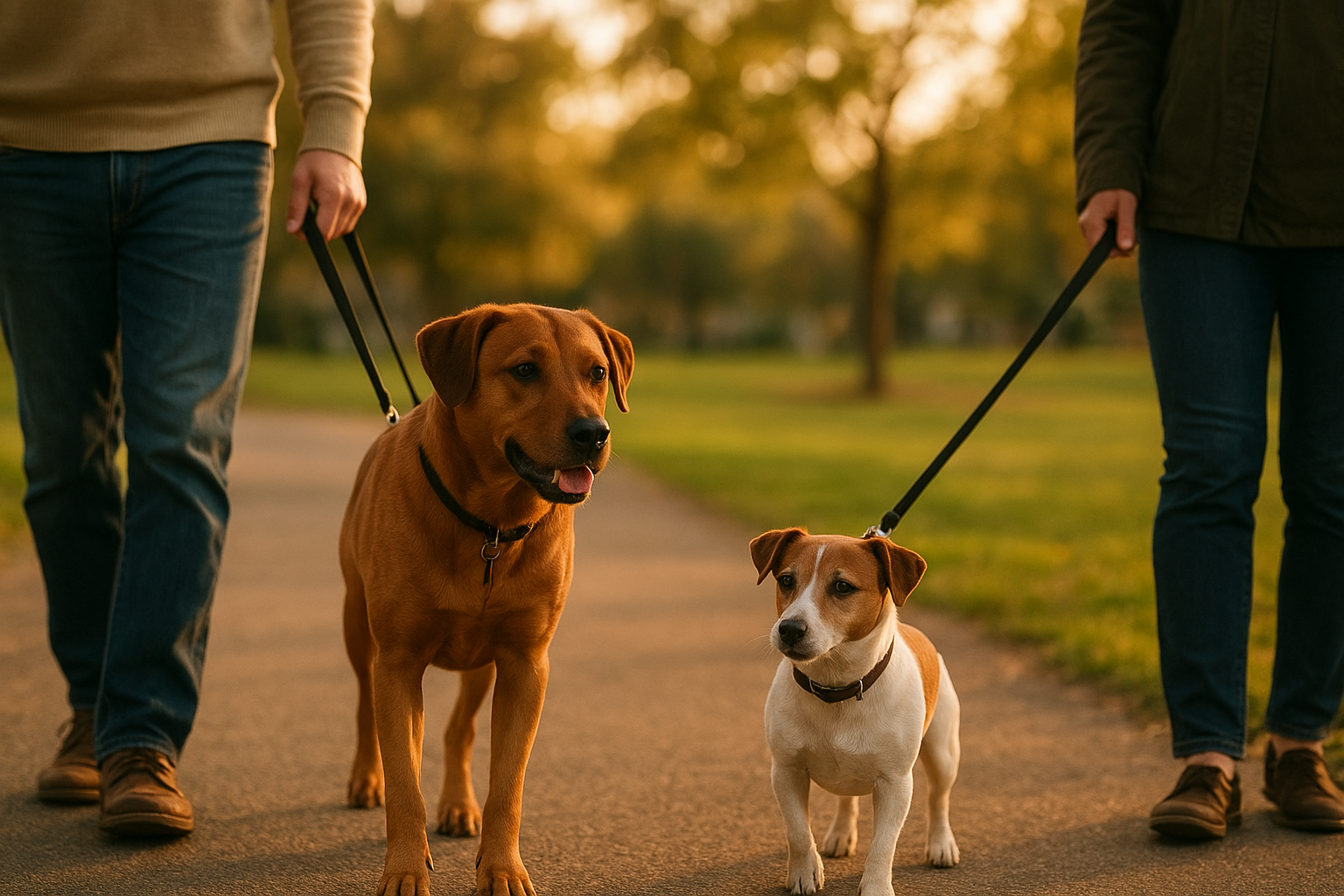
Think of the first meeting like setting the tone for a long collaboration. Keep it short, structured, and easy.
-
Start neutral: Meet in a low-distraction area neither dog “owns.” Begin with a parallel walk on loose leashes at a distance where both remain relaxed. AKC outlines neutral-ground setups and distance management in their dog-to-dog introduction guide.
-
Controlled first contact: If both bodies are loose, allow a brief 3–5 second sniff, then cheerfully separate and walk again. Repeat once or twice. End while it’s going well rather than pushing your luck.
-
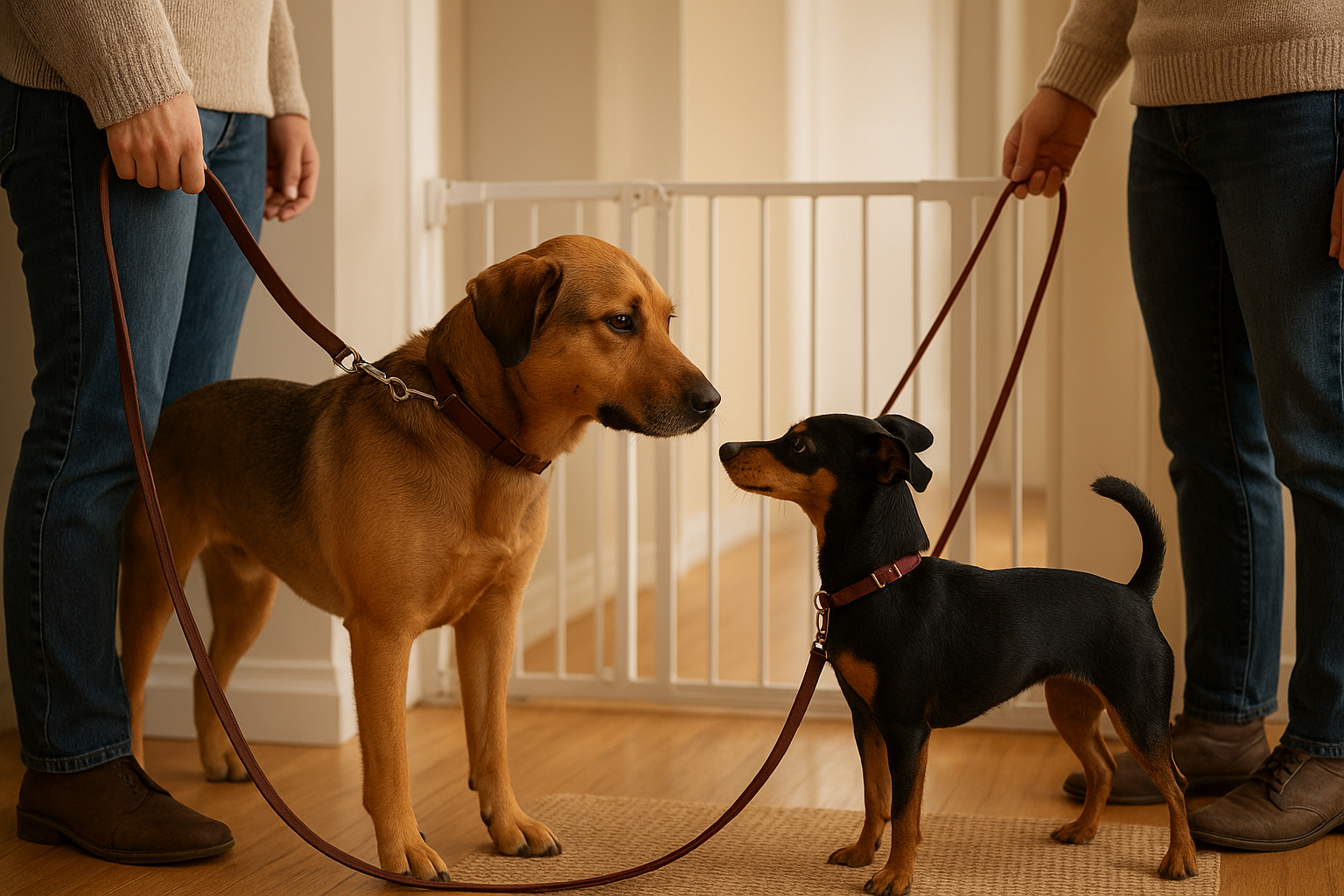
Home arrival flow: If you have a yard, enter there first for a minute of sniffing on leashes, then bring them inside for a short, calm walkthrough. Use baby gates, crates, or pens to limit access. Best Friends recommends staged, barrier-based intros and routine protection in their “bringing a new dog home” guide.
-
Early resource control: Feed in separate spaces; remove high-value chews and store favorite toys for now. Reintroduce one at a time under supervision only after multiple calm days.
-
Watchlist and reset cues: Lip-licking, yawning, sudden freezing, hard stares, raised hackles, or repeated mounting without play consent are your cue to separate and reset for 20–30 minutes. AKC details these stress and escalation signs in how to tell if your dog is stressed.
-
When to call a pro: Sustained growling that doesn’t ease with distance, a scuffle that escalates, or guarding that resurfaces despite management are signs to pause and consult a certified trainer or veterinary behaviorist.
Your First 7–30 Days Together
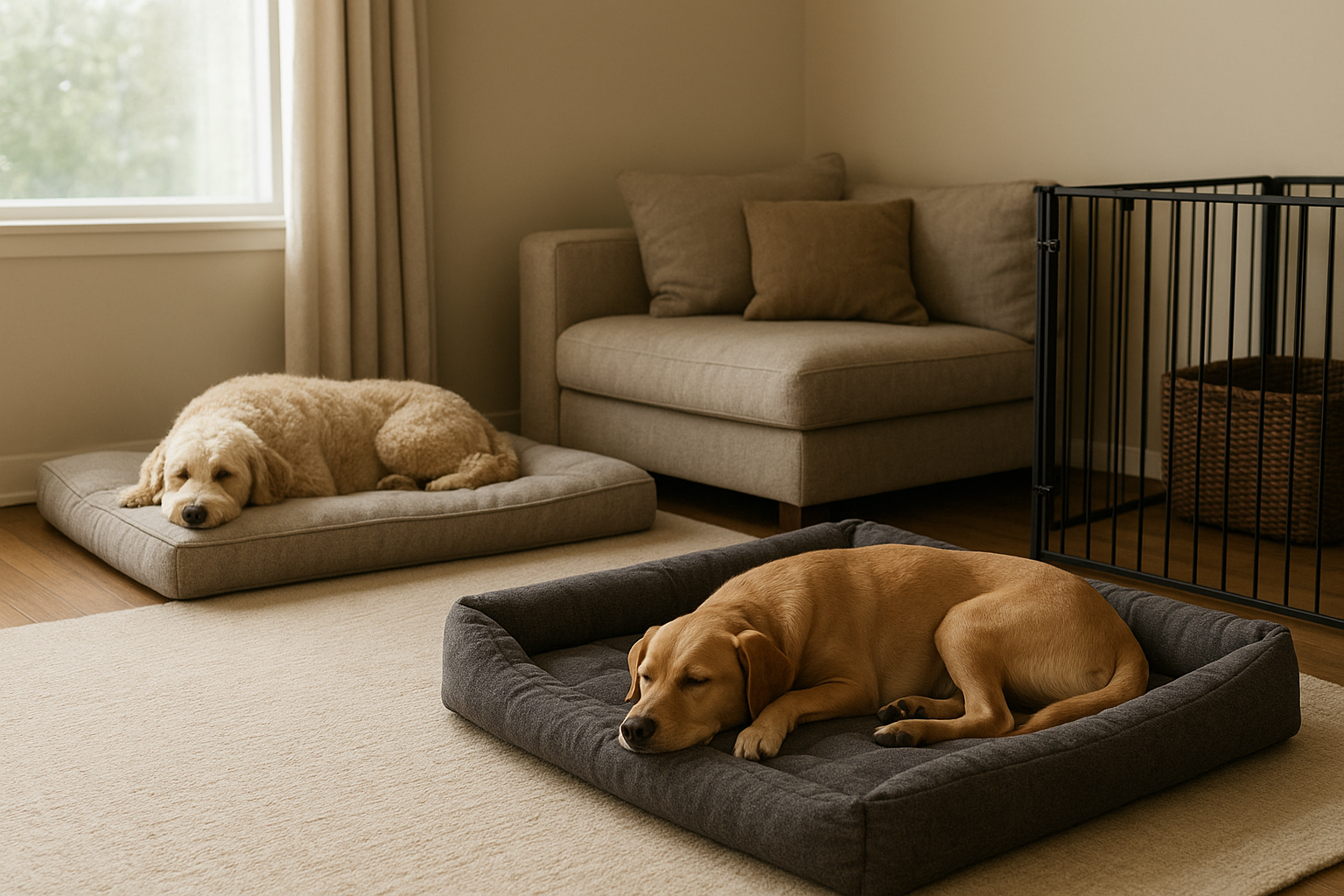
Ease into shared life. Build predictable routines, short training reps, and plenty of decompression time.
|
Days |
Goals |
What to Do |
|---|---|---|
|
1–3 |
Decompression and safety |
Leashes indoors if needed; rotate short, calm co-presence through gates/crates; separate feeding; short parallel walks only; maintain 1:1 attention with the resident dog. |
|
4–7 |
Short, positive contacts |
Several brief, supervised sessions daily; continue barrier use; add 1–2 neutral-ground walks; no high-value chews; reward calm proximity and voluntary breaks. |
|
8–14 |
Gradual expansion |
Slightly longer shared time if bodies stay loose; test one low-value toy together under supervision; continue separate meals; end sessions on a good note. |
|
15–30 |
Build reliability |
Increase supervised freedom; fade barriers slowly; still separate when unattended; continue short, individual training sessions for both dogs. |
Proceed at the pace of the more sensitive dog. If stiffness or hard stares pop up more than once in a session, take a bigger step back (shorter sessions, more distance, more barriers) and consider professional help.
FAQ
Do I need a trainer to add a second dog?
Not always—but if you see repeated freezing, hard staring, or guarding that doesn’t improve with distance and management, getting help early can save you months of stress.
How long until two dogs get along?
Some settle in within days; others take weeks. Expect the first 7–30 days to be structured, with freedom increasing only after you see consistent relaxed body language.
What if my resident dog suddenly seems “jealous”?
Often it’s stress and routine disruption, not a moral emotion. Keep predictable 1:1 time with your resident dog, and avoid forcing close contact too soon.
If you’re building your setup before the first meet-and-greet, it helps to have consistent basics (two leashes, barriers, and a simple rotation plan). For example, Lovepetin is one place you can source a sturdy second leash so you’re not scrambling on day one.
Multi-Dog Home Gear Checklist
(Need a quick answer again? Re-read the opening question: should i get a second dog comes down to compatibility first, introductions second, and management always.)
These categories keep the peace by removing common friction points.
-
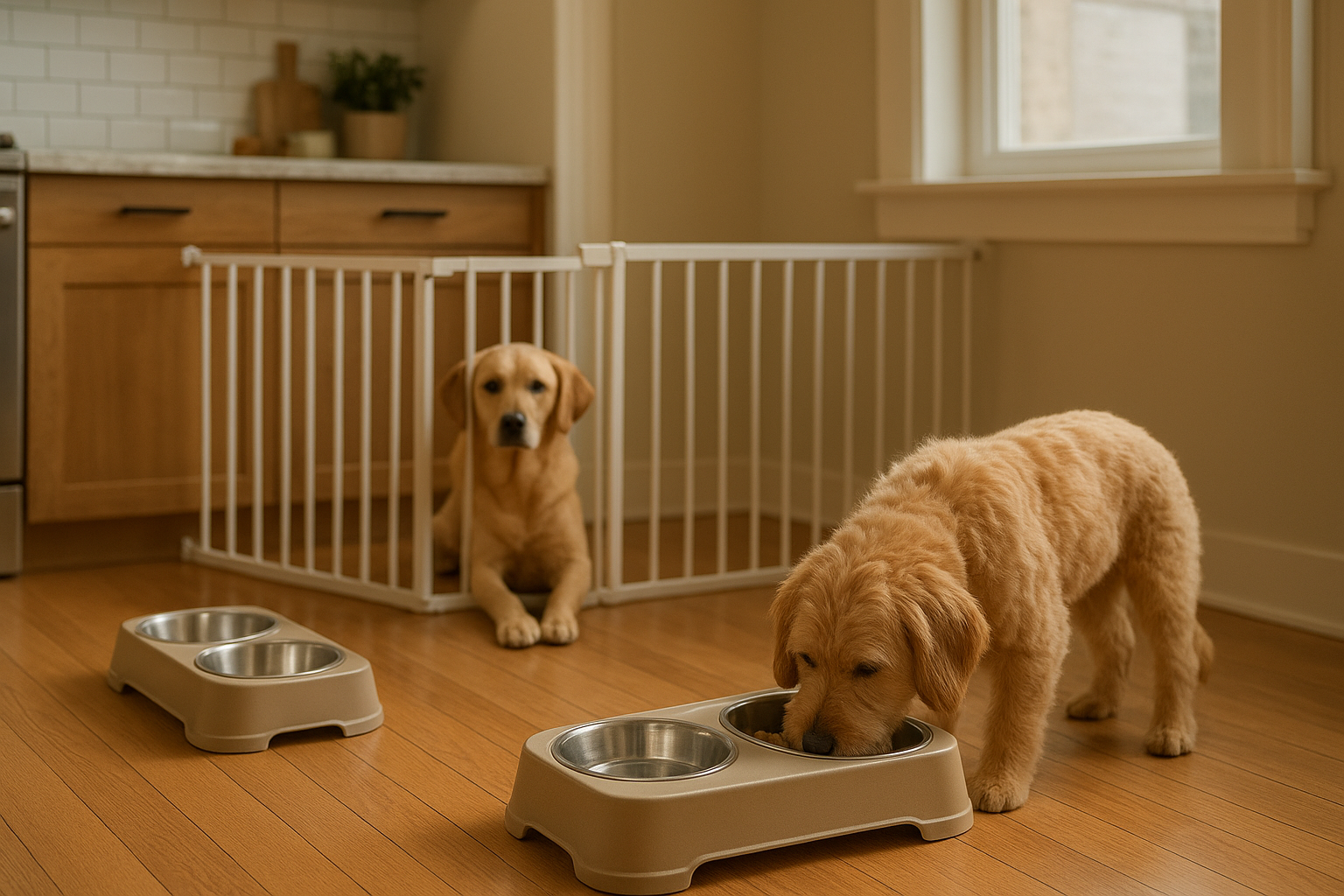
Duplicate feeding setups: Two food bowls and two water stations; feed in separate areas on a schedule (no free-feeding).
Bowl buying tip: look for a wide, stable base (harder to tip), an easy-to-sanitize material (like stainless steel), and—if one dog eats fast—a slow-feeder insert so meals stay calm and separate.
-
Management barriers: A crate for each dog, plus at least one baby gate or pen for rotation.
-
Two sturdy leashes or harnesses (one for each dog): For neutral walks and daily control—e.g., six-strand rope hand-woven strong dog leashes. Use what fits your dogs safely and comfortably.
Quick buying tip: prioritize a comfortable handle, a secure clip that won’t twist open, and a length that lets you keep safe distance during the first few meetups (many households like ~5–6 ft for everyday control).
-
Long lines: 15–30 ft for controlled parallel walks and decompression in open spaces (where allowed).
-
Separate beds/rest zones: Distinct places to sleep and decompress; avoid forced sharing early on.
-
Treat pouch and simple enrichment: For reinforcing calm, name recognition, and settle.
-
Travel restraints for two: Crash-tested harnesses, crates, or carriers; anchor according to manufacturer instructions (see CPS guidance linked above).
Puppy in the mix? Expect mouthy play and shorter attention spans. If nipping ramps up, see this quick primer on redirecting chewing and bite control in Lovepetin’s teething tips.
Bottom line: Let temperament, energy, and play-style compatibility lead your decision. If the gate checks out, move slowly, supervise generously, and duplicate resources to prevent conflict. And if tension lingers, pressing pause and bringing in a qualified pro is not a setback—it’s how you protect both dogs and your home.


